Home Remodel Mistakes to Avoid: What Every Homeowner Should Know
Roughly one in three home remodels goes over budget. That's not a fluke — it's the pattern. And most of the time, the overrun traces back to a handful of mistakes made before the first wall comes down.
We're ATP Construction, and we've been remodeling homes across Star and the Treasure Valley since 2016. We've seen what works and what costs homeowners thousands more than they planned. The good news? Every common mistake is avoidable when you know what to watch for.
This guide walks you through the five things that matter most when you're planning a home remodel:
- Why HGTV doesn't match real life
- The most common home remodel mistakes — and how to avoid them
- How to set a budget that actually holds
- How to hire the right contractor
- How to plan a project that finishes on time
Read it once before you call anyone for a bid. It will save you weeks and likely a lot of money.
Why Home Improvement TV Shows Don't Match Reality
That 30-minute kitchen reveal you saw last night? It took 8 to 12 weeks in real life. The show just edited out everything that wasn't fun to watch.
Home improvement TV is built for entertainment, not accuracy. The cameras skip the permit waits, the inspection delays, the back-ordered cabinets, and the day a plumber finds a surprise behind the wall. What you see is the highlight reel.
Here's what's hidden behind the cuts:
- Full production crews working alongside the contractor, often with extra hands you'd never hire on a normal job
- Sponsored materials delivered fast and free, while real homeowners wait 8 to 16 weeks for cabinets
- Pre-planned designs locked in months before filming, not chosen during demo
- Edited-out delays — failed inspections, weather days, subcontractor scheduling, change orders
Real-world variables don't make it to air. Permits in Star and Ada County take time to pull. Inspections happen on the city's schedule, not yours. Supply chains slow down. Winter weather changes a framing job. None of that fits a 30-minute slot.
Here's what real timelines look like on our jobs in the Treasure Valley:
| Project | TV Show Timeline | Real Remodel Timeline |
|---|---|---|
| Bathroom remodel | 2–3 days | 3–6 weeks |
| Kitchen remodel | 1 week | 8–12 weeks |
| Whole-home renovation | 1–2 episodes | 4–9 months |
When you walk in expecting the TV timeline, every normal day feels like a delay. When you walk in with the real timeline, the project feels right on track.
The Most Common Home Remodel Mistakes (And How to Avoid Them)
The most common home remodel mistakes are underestimating the budget, skipping permits, making design choices during demolition, DIYing licensed work, and ordering materials too late. Each one can add weeks to your schedule and thousands to your final bill.
Here are the six we see most often on home remodel projects in Star and the Treasure Valley — and how to avoid each one.
1. Underestimating the budget.
Most homeowners price the project, then stop. Real remodels need a 10–20% contingency on top of the bid. That cushion covers the surprises behind the walls — old wiring, rotted subfloor, outdated plumbing. If you don't build it in, the first surprise becomes a credit card balance.
2. Skipping permits to "save time."
Unpermitted work can stall a home sale, void insurance claims, and force you to tear out finished work later. Star and Ada County require permits for most structural, electrical, and plumbing changes. Pull them. Your future buyer will check.
3. Making design choices during demolition.
Picking tile while the bathroom is gutted is how projects stall. Cabinets, tile, paint, fixtures, and hardware should be picked and ordered before demo day. Otherwise your crew sits idle waiting for a backsplash you haven't chosen yet.
4. DIYing work that legally requires a licensed trade.
Electrical, plumbing, gas, and HVAC work need licensed trades in Idaho. We've been called in to fix DIY wiring that failed inspection and DIY plumbing that flooded a downstairs ceiling. The "savings" disappeared fast.
5. Ordering materials too late.
Cabinets can run 8–16 weeks. Windows, 6–12. Specialty tile, 4–8. If you wait until demo to order, your crew will hit a wall — literally — and stop. Order early.
6. Expecting TV-show timelines.
We covered this above, but it's worth repeating. A real kitchen takes 8–12 weeks. A real bath takes 3–6. Plan around the truth, not the edit.
Avoid these six and you'll skip the worst of the remodel pain. Most of our smoothest projects start with a homeowner who already knows them.
How to Set a Realistic Home Remodel Budget
Money is the part that keeps homeowners up at night. So let's talk about what a real remodel budget looks like in the Treasure Valley.
Here are typical cost ranges we see on home remodel projects in and around Star, Idaho:1
| Project | Typical Cost Range |
|---|---|
| Bathroom remodel | $15,000–$45,000 |
| Kitchen remodel | $35,000–$90,000+ |
| Whole-home renovation | $100,000–$300,000+ |
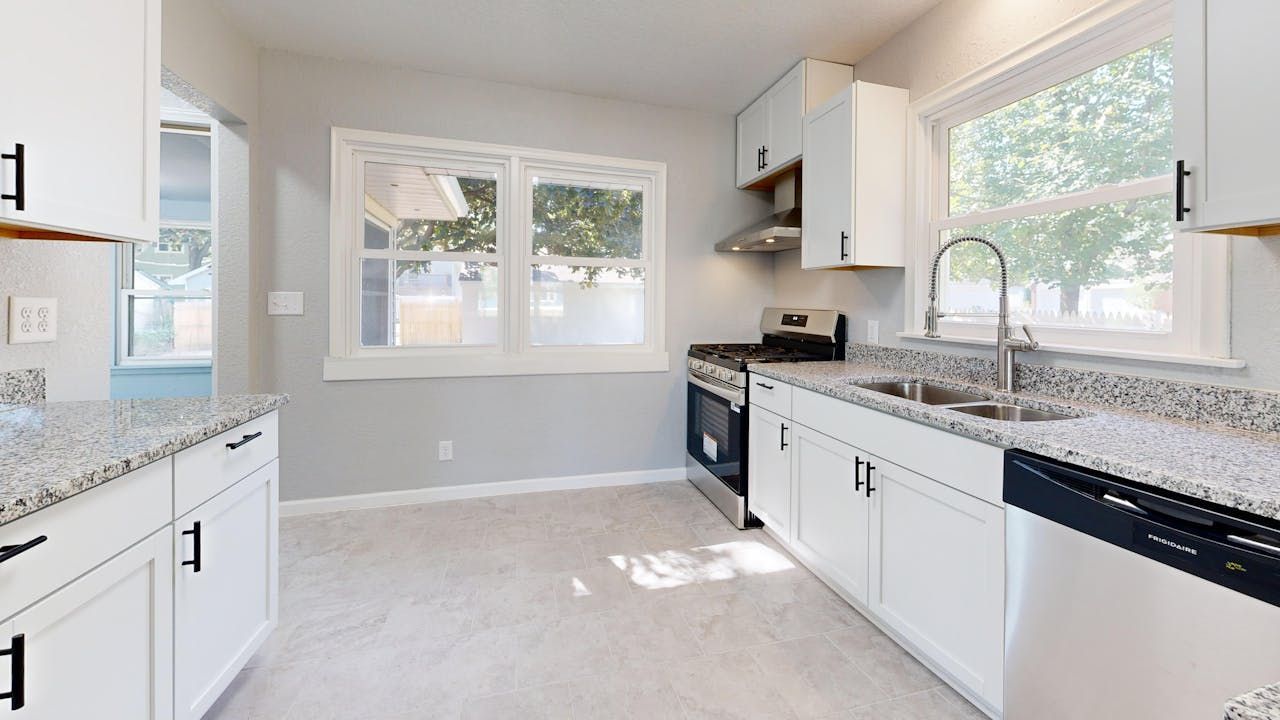
Your number depends on size, finishes, and what's behind the walls. A small powder room with basic finishes lands at the low end. A primary bath with custom tile and a walk-in shower lands at the top. Larger-scope projects like basement, garage, or whole-house
remodels
sit at the higher end because they touch more trades and more square footage.
The lowest bid is rarely the cheapest in the end.
When one bid comes in far below the others, something is missing. It's often permits, allowances for materials you haven't picked yet, or labor for trades the contractor plans to "figure out later." That gap shows up as change orders mid-project.
Build in a 10–20% contingency.
On a $50,000 kitchen, that's $5,000–$10,000 set aside for the unknown. You may not need it. But if a plumber finds galvanized pipe behind the wall or an electrician finds a panel that won't pass inspection, you're not stuck.
Know the material vs. labor split.
On most remodels, expect a 40/60 or 50/50 split between materials and labor. Custom cabinets and high-end tile push materials up. Tricky framing, rerouting plumbing, or working around old wiring pushes labor up.
Plan how you'll pay. Cash is the simplest.
A HELOC works for mid-size projects and uses your home's equity. A construction loan or renovation loan fits larger projects with structural changes. Talk to your lender before you finalize the design — what you can borrow shapes what you can build.
Where homeowners most often underestimate:
- Electrical updates — older homes in Ada County often need panel upgrades to support new appliances
- Subfloor repairs — soft spots and water damage hide under old flooring
- Plumbing reroutes — moving a sink or shower drain costs more than it looks
- Drywall and paint
— touching one wall usually means painting the whole room
Walk in with a real number and a real cushion. The project goes smoother when the budget already expects the surprises.
How to Hire the Right Remodeling Contractor
The contractor you pick shapes everything — your budget, your timeline, your stress level. Choose well and the project runs. Choose poorly and you're calling someone like us to clean it up.
Verify registration, bond, and insurance.
Idaho doesn't license general contractors — it requires them to register with the Idaho Contractors Board through the Division of Occupational and Professional Licenses (DOPL). Any contractor doing work over $2,000 must be registered. You can look up any contractor at dopl.idaho.gov before you sign anything. Specialty trades — electricians, plumbers, and HVAC installers — do hold state licenses, and you can verify those at the same site. Ask for proof of general liability insurance and workers' comp. A real contractor will hand it over without flinching.
Hire local.
A contractor based in or near your area knows permit offices, local inspectors, and which suppliers stock what. Local crews show up on time because the drive is short. Local references are easy to check. Out-of-area contractors can work, but you trade convenience and accountability for it.
Ask these questions before you sign:
- Are you registered with the Idaho Contractors Board, bonded, and insured? Can I see proof?
- Will you pull all required permits?
- What's the payment schedule, and what triggers each payment?
- How do you handle change orders — written or verbal?
- Who is my main point of contact during the project?
- What's your typical timeline for a project this size?
- Can I see two or three recent local references?
Watch for these red flags:
- Unregistered for jobs over $2,000 (a violation of Idaho law)
- Cash-only or large upfront deposits (more than 10–20%)
- No written contract or a vague one-page agreement
- "We don't usually pull permits for this kind of work"
- A timeline that sounds too fast for the scope
- Pressure to sign today
- No physical business address or local presence
Read the reviews — really read them.
A Google Business Profile with 50 reviews and a steady stream of recent ones tells you more than a polished website. Look for reviews that mention communication, cleanup, and how the contractor handled problems. Every job hits a snag. The question is what happened next.
A good contractor will welcome every one of these questions. If a contractor pushes back on showing their registration, their insurance, or their references, you have your answer.
Planning a Home Remodel That Actually Finishes On Time
A remodel that finishes on time isn't luck. It's planning. The projects that wrap on schedule almost always start with a homeowner who locked in the details before demo day.
Lock in design and materials before demolition. Every cabinet, tile, fixture, paint color, and piece of hardware should be picked and ordered before the first wall comes down. This is the single biggest predictor of an on-time finish. Crews can't install what hasn't arrived.
Build the timeline backwards.
Start with your "must-be-done-by" date — a holiday, a baby's arrival, a move-in. Work backwards from there:
- Move-in or finish date — your hard deadline
- Final inspections and punch list — 1–2 weeks before
- Finish work (paint, trim, hardware) — 2–3 weeks before
- Cabinets, tile, flooring — 3–6 weeks before
- Rough-in trades (framing, electrical, plumbing) — 4–8 weeks before
- Demolition and permits — 6–12 weeks before, depending on project size
- Material ordering — 3–4 months before demo for cabinets and windows
- Design and contractor hiring — 2–4 months before that
Set a communication cadence.
A weekly check-in with your contractor — even a 15-minute call or walkthrough — catches small issues before they grow. Ask what got done, what's next, what's at risk, and what you need to decide by when.
Know what a good
general contractor
handles for you:
- Pulling permits with the City of Star or Ada County
- Scheduling and managing subcontractors
- Coordinating inspections
- Ordering and tracking materials
- Daily site cleanup and final cleanup
- Communication with you when something changes
Start the conversation early.
Most homeowners call us 2 to 4 months before they want work to begin. That gives time for design, material lead times, and permit pulls. Calling in March for a kitchen you want finished by Thanksgiving works. Calling in September for the same job is tight.
A remodel done right adds value, comfort, and years of enjoyment to your home. Done poorly, it's a long story you'll be telling for years. The difference is in the planning.
Ready to plan your home remodel the right way? Call ATP Construction at (208) 741-4371 to get started on your home project!